Introduction:
If you belong to academia, it is highly likely that you come across phrases like ‘canvas quiz log cheating’, ‘Turnitin plagiarism checker’, and ‘custom browser’ etc. All these are methods to prevent cheating on an online exam or malpractices in virtual learning.
Before we jump into the methods to prevent cheating, let us get an idea about why online learning is here to stay, how far-reaching are its implications, and why it is the need of the hour to uproot malpractices in it.
Online Education is here to stay, why?
With the advancement in technology, a radical change has been observed in pedagogy. Although the process was very slow over the last few years, the pandemic (COVID 19) turned out to be an accelerator.
Almost all educational institutes, small and large, have taken their classrooms online. Students are encouraged to consult online resources so they can deepen their knowledge and think critically. Exams and assignments are now taken and submitted via LMS (Learning management system).
Not only this, online courses are also on the rise these days so much so that prestigious institutes like Harvard and Oxford are offering them.
Distance learning, though not effective as the classical, is here to stay as it is cost effective and can scale exponentially.
Far Reaching Implications of Online Learning? And The Hurdles in Its Way?
Distance learning has the potential to transform the current dismal scenario of the world where millions of children are out of school. It is cost and time effective. With equal education, we are bound to move closer to an ideal of an equal world where all have equal opportunities if not equal status as a human being.
The key hurdles in online learning is the pervasive practice of cheating and the ineffectual strategies to impart knowledge. While the latter may take some time to develop, the former (cheating) should be prevented at all costs. Not only that it questions the viability of online learning but also it will move us towards an unjust world.
Following are some of the many practices adopted by academia to prevent cheating.
1. Using An Anti-Plagiarism Software:
One of the best ways to assess a student’s command over a particular subject is to assign him/her a written assignment. Teachers and professors around the world assign multiple writing tasks during the semester and even in exams. There is always a temptation on the student’s side to copy paste from the resources on the internet, and no checker can possibly scour through the internet to ensure whether the student cheated or not.
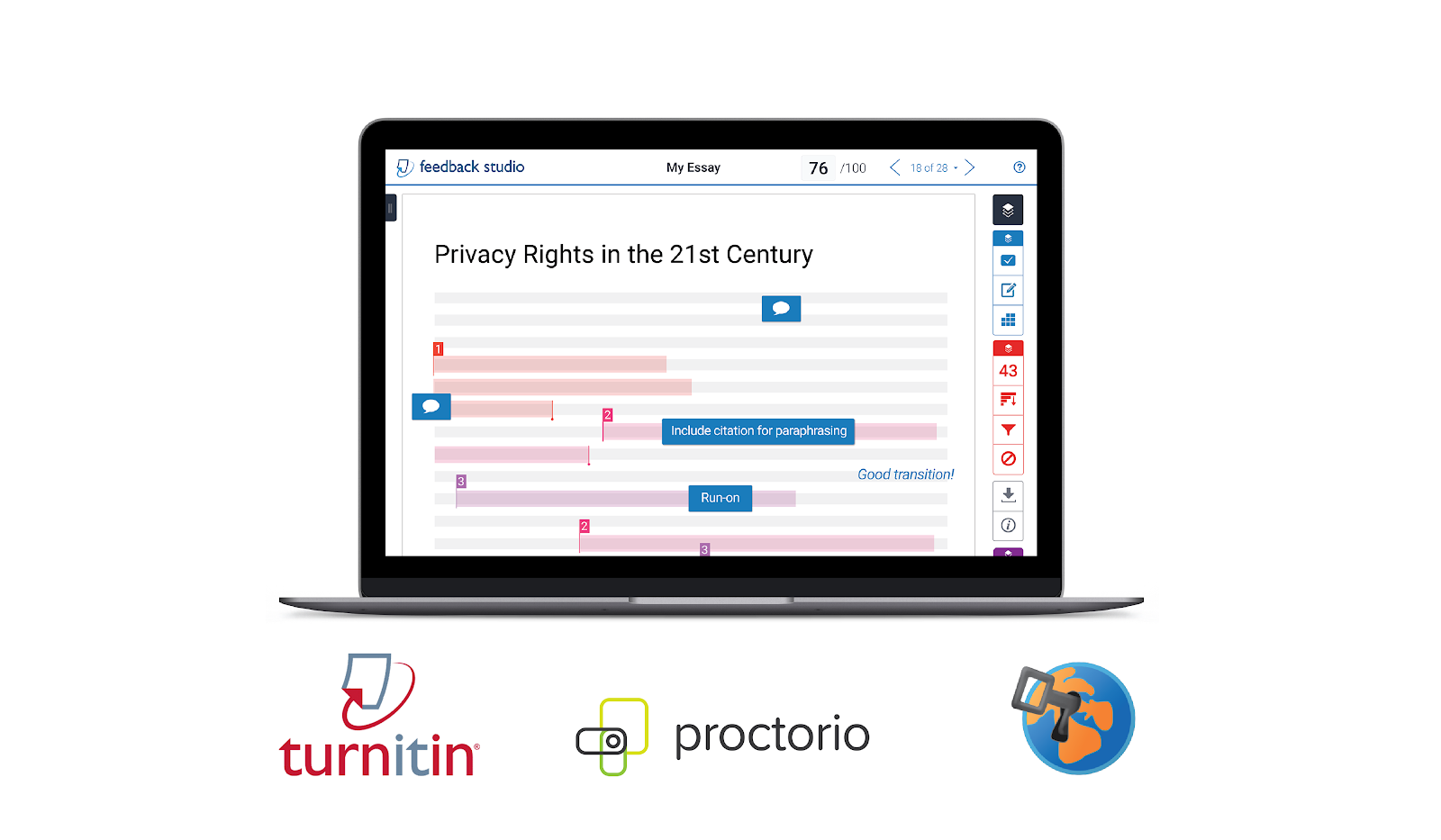
The best way to do this is to use an anti-plagiarism software, and it has been a great help to instructors. While there are multiple free software’s like Dupli checker and smallseotools, the most often used software by the instructors in turnitin.
These software are so powerful that they report, with resources mentioned, even a single paragraph if it is copied from the internet.
2. Using A Log Software:
Another way to prevent cheating during an online exam is to monitor the log of the students. Software like canva records each log during a quiz, and professors while monitoring the tabs opened during quiz can conclusively determine whether someone has cheated on his, her exam or not.
3. Using Proctoring Software:
Proctoring software’s records the voice and video of each and every moment while students are taking a quiz or an exam. By real time tracking of students, the teachers can easily judge whether all of them are following rules and regulations. Proctoring softwares are not very popular as they are a very strict means of surveillance.
4. Using A Custom Browser:
Many institutes nowadays use custom browsers to prevent cheating. These browsers don’t allow students to leave the browser window until they are done with the exam.
Some custom browsers also allow for the monitoring of students using a webcam. It is, by far, the most effective way to prevent cheating during an online exam.
Conclusion:
Academia is pushing hard to prevent cheating practices in exams, and so far they have largely been successful. With the advancement in technology, more effective methods will arise to the scene to curb cheating, but it is also true for the hacks to bypass them. Online education is very important for a better future.