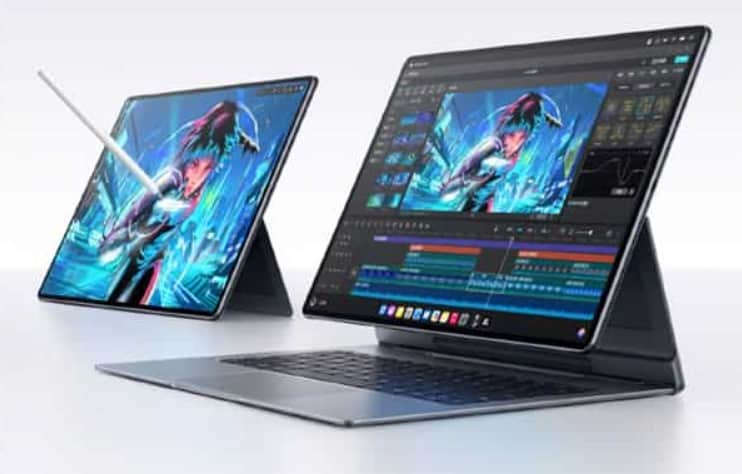
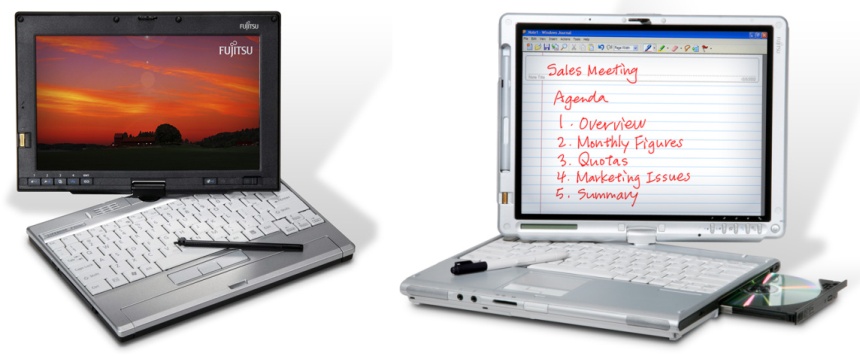
The ultraportable MacBook some were hoping for didn’t arrive at WWDC, so it seems a good time to look at options for the mobile user who prizes portability above all else. Fujitsu Siemens’ P1610, despite its age – it was announced in November last year – remains one of the most coveted mini notebooks; the size of a hardback book with a convertible touch-screen, I dropped one in my bag to see just how functional the 2.2lb device can be.

Road-warriors are well catered for when it comes to kitting out the P1610. On top of the basic Intel Core Solo low-voltage 1.2GHz processor there’s a choice of 512MB or 1GB of RAM, hard-drives from 30GB upward, standard a/b/g WiFi and optional Bluetooth, a HSDPA cellular upgrade and even a 32GB solid-state hard-drive. Sadly my review unit came without either of the latter two options, although the PCMCIA slot makes adding your own mobile broadband card a possibility.

A single screen choice is available across the board, being an 8.9-inch WXGA touch-enabled panel using indoor/outdoor technology. It’s no hardship, being crisp and clear, although it requires greater pressure (either with your finger or the included stylus) than the Samsung Q1 UMPC’s screen. Some prefer that, but I found that maintaining the continuous pressure required to, say, drag and drop an icon or write in cursive ended up in a precarious balance between an interrupted movement and fearing damaging the screen through pressing too hard. Press-and-hold (which in a passive-screened Tablet replicates a right-click) met with dubious success, intermittently – and frustratingly – releasing prematurely. Nonetheless, after calibration general tapping and link-surfing was eminently possible with a fingertip, and the screen proved resilient to vectoring (where your hand touches the screen when writing and registers as a false touch).
…
Read full post here:
https://www.slashgear.com/slashgear-review-fujitsu-siemens-ultra-portable-p1610-135725/